Imitation is not always the sincerest form of flattery (Part 2)

In my last post, I talked about copying as a way of learning, and also the far less appropriate type of copying that is image theft for self-promotion.

This post is about another dubious form of copying…one with a greater or lesser degree of malicious intent, but it’s definitely there.

CONTENT COPYING
Last week, I had two adverts for Easter minis pop up on the same social media stream.

Actually, there’s been waaaay more than two, but these two caught my eye.

Why?

Because they were almost identical.

Almost.

There was a difference in price…one priced its mini sessions at £65, and the other at £45. 

That wasn’t the only difference, but the others were much less obvious, and if you didn’t look closely, you’d be forgiven for thinking they were from the same photographer. Same layout, very similar banner, very similar logo, very similar wording.

Now let’s look at that a little more closely…two photographers in the same local area, one copying the other (can’t tell which), one undercutting the other by almost 1/3, from a higher price that was already way too low. It’s nothing more than a race to the bottom, with (in this case) a bit of nobbling thrown in.
Photographers, what are we doing to our industry? This kind of activity is actively destroying it from within – it’s killing pricing, confusing the consumers, and disrespecting fellow photographers. It’s awful, unprofessional behaviour…making the higher-priced photographer do the majority of the marketing work before reeling in clients by reproducing someone else’s work and squeezing prices that are already too low to be sustainable.

I said “we” above for a reason. It’s not all photographers, I know, it’s largely those at the bottom of the pricing scale, but as an industry we are a collective and what hurts some of us ultimately hurts all of us.

So how do we deal with it? Call out the cheaper photographer? Tell the other photographer? I genuinely don’t have the answer to that.

But it stinks.

Imitation is not always the sincerest form of flattery (Part 1)

Let’s talk copying…

Copying, in the photography industry, sadly takes many forms. Sometimes it’s the simple and blatant theft of an image, sometimes it’s copying someone else’s set-ups, style, website, adverts…there’s a fair amount if it about.

Chances are, if you’ve been in the industry for any length of time, it’s likely that you’ve had your work copied in one way or another…

USING OTHER PHOTOGRAPHERS’ WORK, OR IMAGE THEFT
Most photographers beyond a certain number of years’ experience have had their work used by other “photographers” to advertise their own work. In some circles it’s seen as a rite of passage and a photographer “should feel flattered that their work was deemed good enough” – which, frankly speaking, is utter tripe. It’s unethical, outrageous and wrong.

Here’s the long and short of it…

Taking other people’s work and passing it off as your own is
a) Theft
b) Lying to potential clients.

The excuses and reasons for stealing other photographers’ work for your own adverts or portfolio don’t wash – ever. If it’s meant to be an example of what you can do, why not just do it yourself and use your own work? And what’s going to happen when clients book you on the basis of the work you’ve untruthfully put forward as your own, and you don’t/can’t come up with the goods?

You’re going to fall spectacularly flat on your face. Poor reviews, potential legal action, financial backlash, and trampling over your own industry.

Just Don’t.

COPYING STYLE
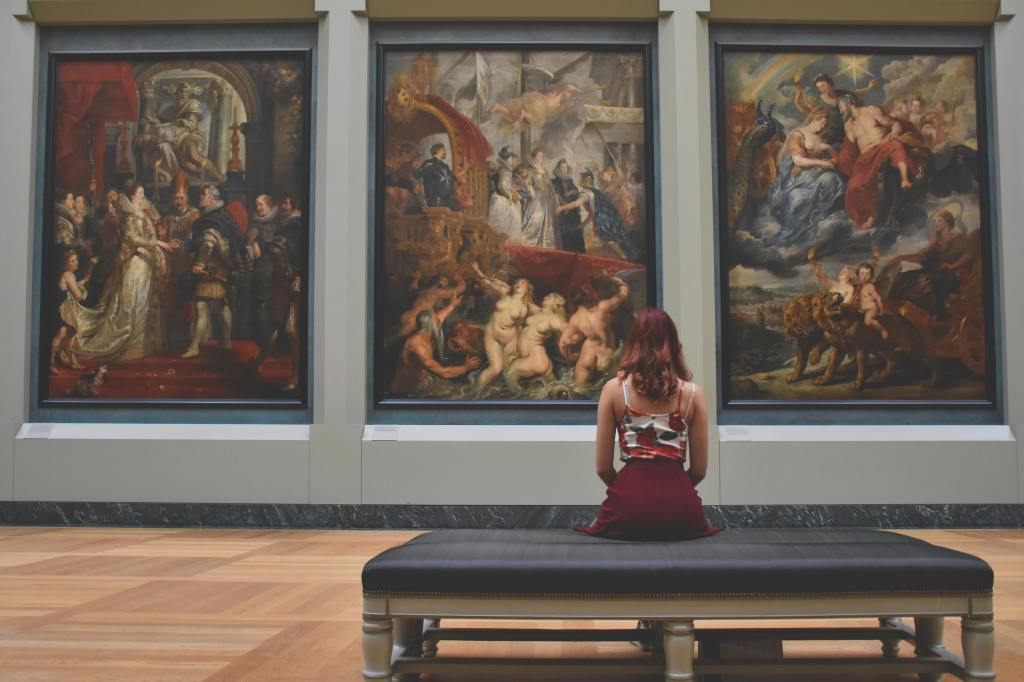
Copying other people’s work has been going on for centuries…aspiring artists and art students were encouraged, in some cases required as part of their education, to copy great works of art with the goal of learning and improving. The act of doing, of following in the paths of the knowledgeable and accomplished, was regarded as an essential part of learning the craft, far superior to theory-based chalk-and-talk. Doing is how we learn.

So where’s the problem?


The problem comes when the output from copying-by-doing is passed off as the copying photographer’s own work…which it isn’t. It’s something we see a lot of in social portraiture – one photographer comes up with a new idea and then lots of others jump on the bandwagon and do the same thing. That, or someone comes up with a new prop, does something eye-catching, and then every other photographer’s doing the same thing. You could argue that it’s less of an issue than taking someone’s actual work, but equally you can argue that it dilutes the industry and takes the shine off the original photographer’s originality.

But Snap, what about using other work as inspiration?

Using work as inspiration isn’t the same as copying – it’s taking an idea or an object and creating something new. As photographers, we’re already standing on the shoulders of giants simply by holding our current camera bodies and producing work – creativity also has that journey. Without Caravaggio, Rembrandt’s work would have been something other than what it was; “Rembrandt lighting” is a technique still in use today, but it’s not “copying” to use Rembrandt lighting in your studio portraiture. Go ahead and build on ideas and something amazing can happen.


Show me the bunny

The Silly Season is generally thought of as being at the end of the year, but for some photographers, it’s around now.

I’ve lost count of the number of mini sessions I’ve seen advertised on social media and elsewhere that shout “with LIVE CHICKS!”, “with BUNNIES!” or “with REAL DUCKLINGS!” as part of the draw, alongside photos of children with said living, breathing creatures. Some of those children still in nappies.

Well, you can imagine just how THAT’s going to pan out…

Little ones who don’t know any better will of course reach out and make a grab for those cute little fluffy bundles, and, holding them fast in their chubby little fists. some will try to find out what they taste like too. But it’s all in the name of cute photos (and money), so it’s ok, right??

Wrong. So, so wrong.

Can you imagine just how stressful those cutesie photoshoots are for those animals, just babies themselves? It’s disturbing that there are photographers* out there who will put living creatures into a situation of stress and pain, and that there are people who will then pay to have their children photographed contributing to that stress and pain.

(NB – I do NOT hold the children responsible in any way for their part in this…they don’t know any better. Their desire to grab and hold something interesting is natural, and when that interesting object is something they shouldn’t touch for whatever reason, parents or carers step in and prevent anything bad from happening.)

But dig a little deeper, and the chain extends further. Posts on social media where these photographers* are looking to hire chicks, ducklings or baby rabbits for photoshoots, and finding them. Or buying them and then discarding them, or selling them on.

Here’s the thing…

ANIMALS ARE NOT PROPS.

(It’s not rocket science.)

Here’s why…

  1. Chicks and ducklings need a specific setup for their survival, including heatlamps and bedding.
  2. The studio environment alone, with lights, noises, temperature changes and hard surfaces, is very stressful for animals that aren’t trained to perform.
  3. Animals are at serious risk of injury or death from being mishandled, dropped or crushed. Children are also at risk of being bitten or scratched.
  4. Birds can carry diseases such as parrot fever and salmonella.
  5. Rabbits as a rule don’t like being handled…they’re prey animals and find it very stressful.

    The bottom line is that, in the UK, it’s not legal.. Under the Animal Welfare (Licensing of Activities Involving Animals)(England) 2018 regulations, all animals working in the audiovisual industries for commercial purposes must be licensed. Which is great, but it’s not being enforced everywhere. So, just to be clear, I’ll say it again…

    ANIMALS ARE NOT PROPS.

If you see it, do those little critters a favour, and report it.

* Some photographers, thankfully in the minority. Notably at the cheapest end of the market. Thankfully this abhorrent practice hasn’t taken a very strong hold in the UK yet, though you don’t have to look very hard to find examples.

Sources:
https://www2.hse.ie/babies-children/child-safety/pets/birds/
https://assets.publishing.service.gov.uk/media/5a7ebf4f40f0b62305b82ec7/broiler_flocks_cop.pdf
https://science.rspca.org.uk/documents/d/science/rspca-duck-welfare-standards-2023
https://www.caldervets.co.uk/pet-help-advice/rabbits/young-rabbits/77-how-to-care-for-a-new-pet-rabbit
https://rabbitwelfare.co.uk/new-to-rabbits/

What to do when you need more clients…